





INNOVATION & TECHNOLOGY

The Science of Transcutaneous Analysis

Discover the research-validated pathways and non-invasive technologies we employ to bridge the global diagnostic gap in anemia care.

Pioneering the Next Generation of Non-Invasive Hematological Analysis.

TRANSCUTANEOUS OPTICS

Utilizing multi-spectral optical sensors to measure hemoglobin absorption through the tissue without venipuncture.

ALGORITHMIC RIGOR

Implementing advanced digital signal processing to filter environmental noise and ensure clinical accuracy across diverse demographics.

SCALABLE ARCHITECTURE

Engineering ruggedized, low-power solutions designed for immediate deployment in testing-limited environments worldwide.

CLINICAL DIFFERENTIATORS
001
Validated Accuracy
Comparative studies against laboratory-standard CBC analyzers ensure that our technology-assisted results meet the rigorous demands of clinical medical insight.
Mediam ShapeSmall Shape
002
Field Autonomy Engineered for deployment in testing-limited environments, our scalable health solutions function independently of traditional laboratory infrastructure and cold-chain logistics.
Mediam ShapeMediam Shape
003
Atraumatic Screening By utilizing transcutaneous analysis, we eliminate the biological and psychological barriers of invasive testing, encouraging higher participation in preventative care and awareness efforts.
Hero Shape
THE TECHNOLOGY PATHWAY

The Mechanics of Transcutaneous Analysis

Scale Shape
Number Shape
STEP 1

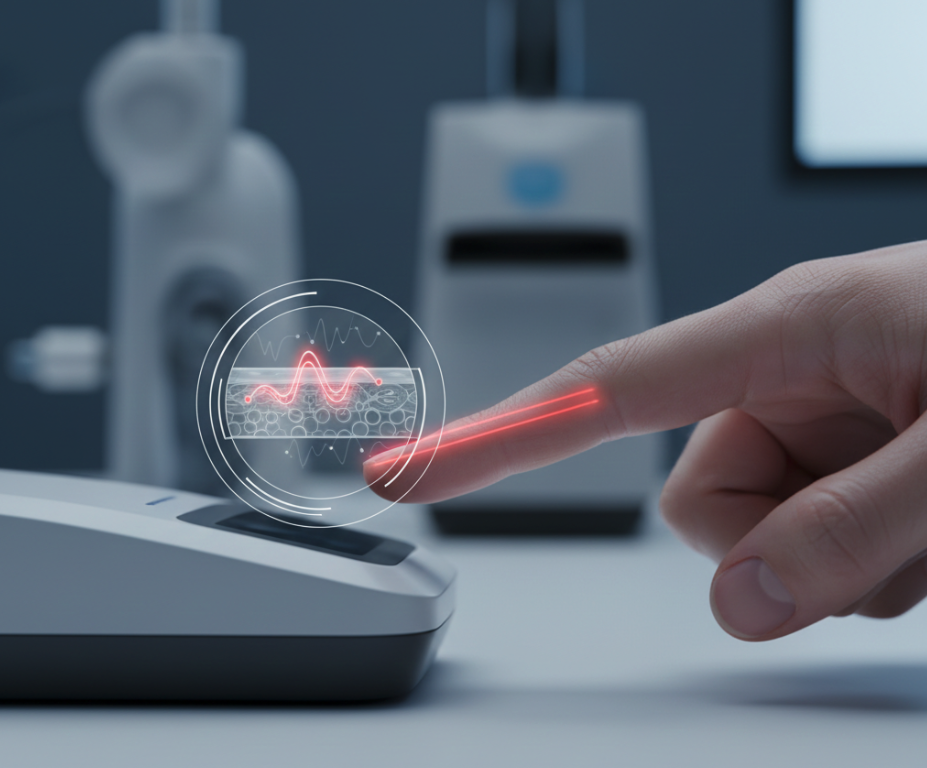
Wavelength Emission

The process begins with the emission of multi-spectral light (660nm – 940nm) into the vascularized tissue, typically at the fingernail bed or palpebral conjunctiva. This technology-assisted approach allows for deep tissue penetration without the need for invasive blood extraction.
Scale Shape
Number Shape
STEP 2

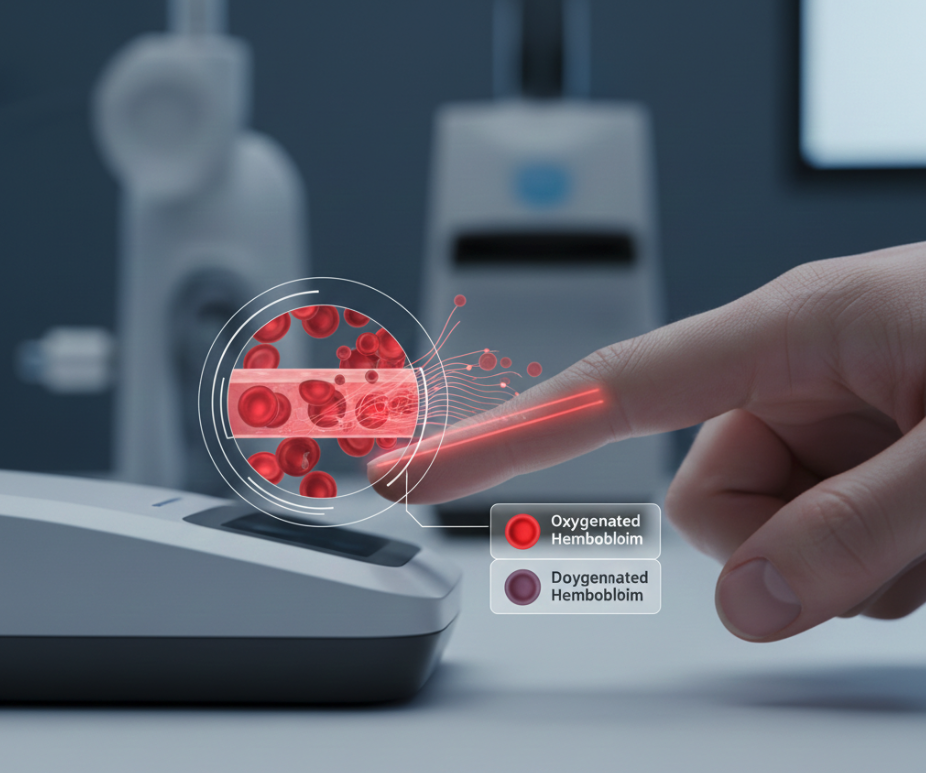
Absorption Modulation

As light passes through the tissue, it interacts with hemoglobin molecules. Oxygenated and deoxygenated hemoglobin absorb light at different rates, creating a unique optical signature that our sensors capture to provide innovation-driven insights.
Scale Shape
Number Shape
STEP 3
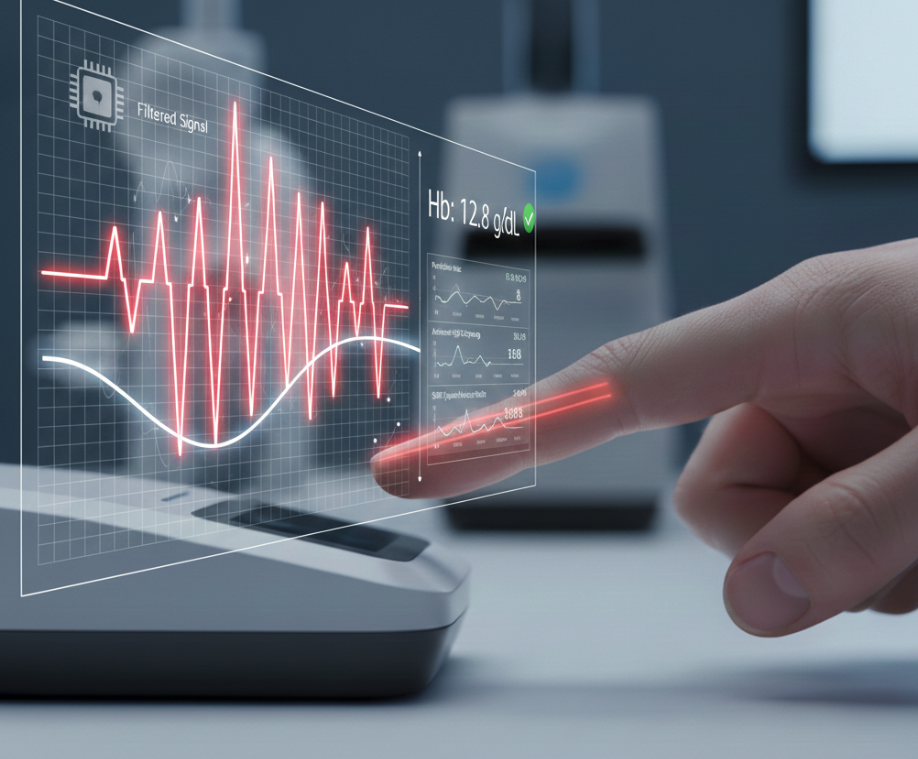
Digital Signal

Our high-sensitivity sensors capture the remaining light and utilize advanced digital signal processing to filter out ambient noise. The resulting data is analyzed against research-validated models to provide a real-time hemoglobin estimation, supporting informed health decision-making.